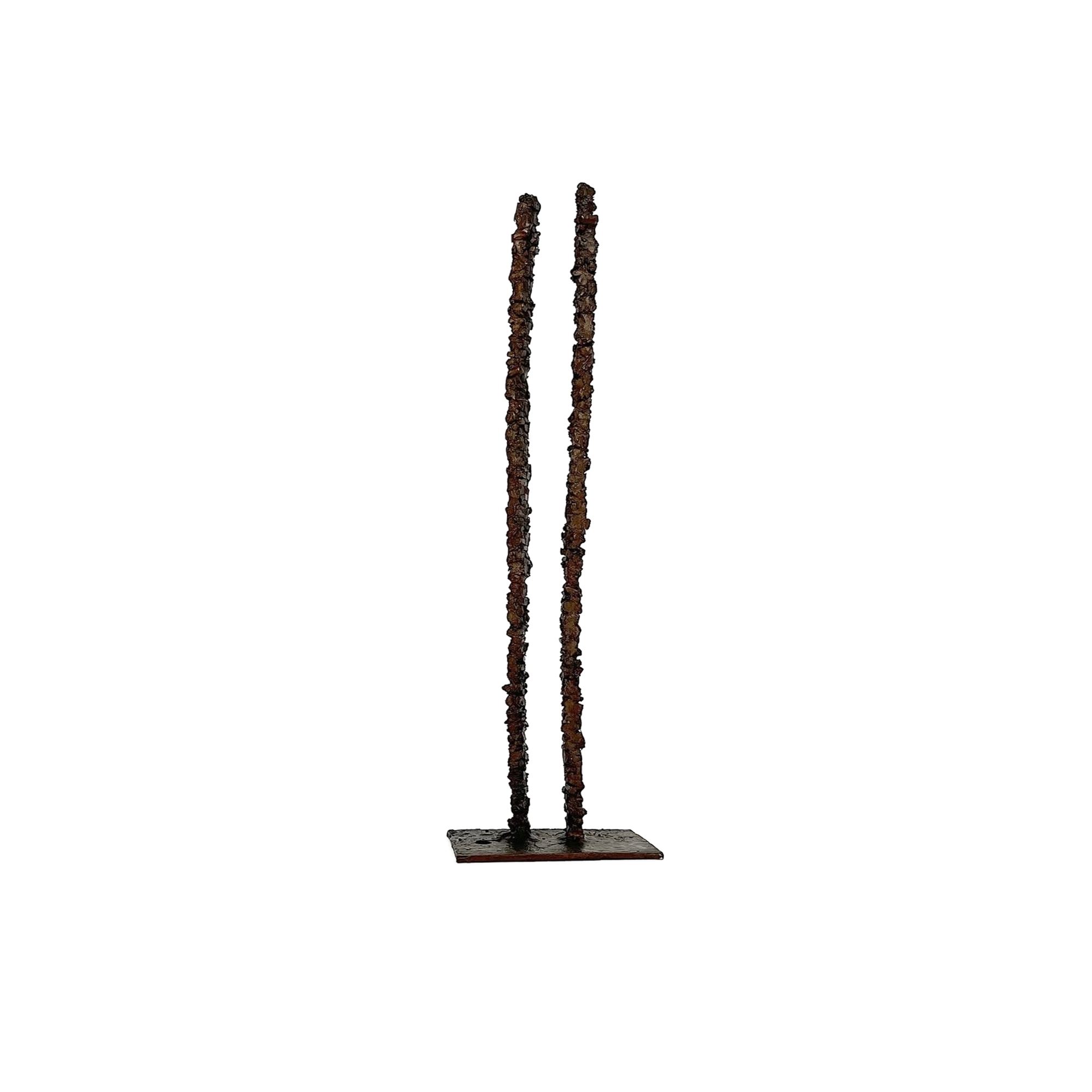
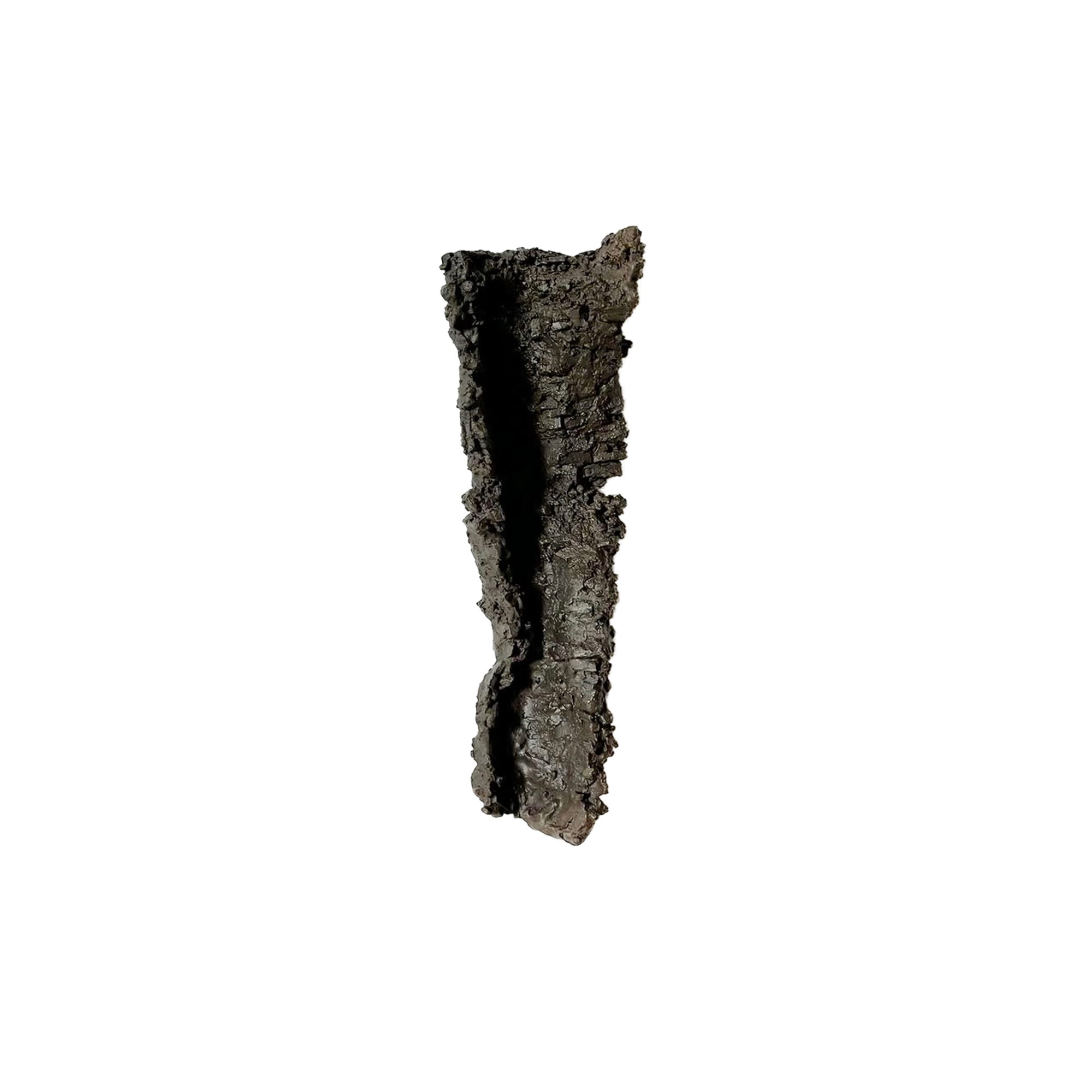
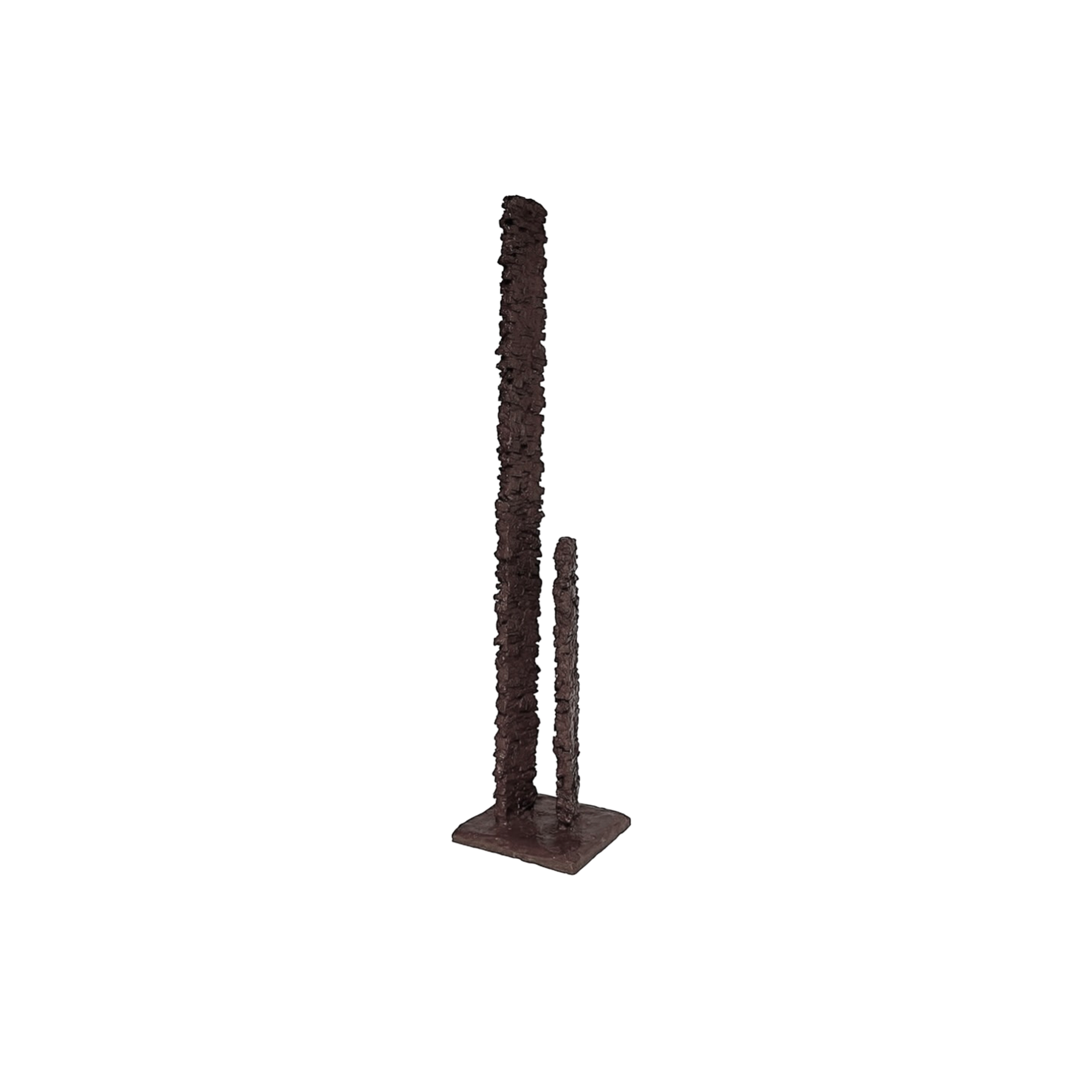
Pontus Ikander mainly works in bronze, creating sculptures that convey existential traces and a sense of the passage of time.
Ikander (b. 1987) takes his point of departure in ruins and the remains of buildings following destruction. He is drawn to the inner structures of architecture—parts that are normally hidden but become exposed when buildings break down.
Bricks are central to his practice. Once part of a larger structure, they are broken, shaped, and brought together in new forms. His works appear as remnants and skeletons of architectural structures, evoking both catastrophe and death while simultaneously bearing signs of a struggle for life. They carry a sense of collapse and loss, while also suggesting strength, survival, and the possibility of renewal.
Ikander’s works move between destruction and creation, decay and beauty. They focus on what remains after an event, a process, or a collapse, and on how these fragments can take on a new life. In remnants and ruins, there is something both melancholic and apocalyptic. This tension also characterizes Ikander’s artistic practice. His sculptures preserve traces of what once was, while allowing them to become something new and unexpected — inviting the viewer to contemplate the passage of time, the fragility of existence, and the possibility of transformation.